Xintau: A Handwritten Font That Makes Handmade Products Feel Personal
I pulled a fresh sheet of cotton paper from the stack and set it on my worktable. The candle jars were lined up, wax cooling, and I needed a label that would carry the scent name in a way that felt more like a handwritten note than a printed sticker. I had been cycling through fonts for nearly an hour, and nothing quite landed. Then I opened Xintau.
The moment I typed the word “Rosemary & Mint” into the preview, I knew this was the one. The letters flowed with a natural, unhurried rhythm. The strokes varied in weight just enough to mimic real pen pressure, and the overall feel was warm and approachable. It was the kind of handwritten font that makes a product look as if someone took the time to write the label by hand, while still being crisp enough for professional product presentation.
What Makes Xintau Feel Like a True Handwritten Typeface
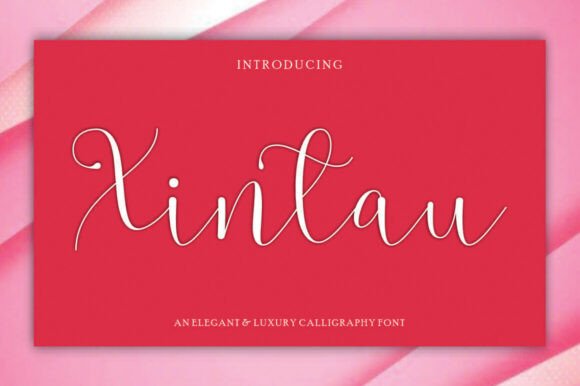
Xintau is a script font designed to capture the character of casual cursive handwriting. The letterforms are fluid and organic, with connecting strokes that flow naturally from one character to the next. The varying stroke widths give it a genuine ink-on-paper quality, and the slight irregularities in the baseline prevent it from looking mechanical or overly polished. This is not a stiff, formal calligraphy font. It is loose, expressive, and carries an authenticity that resonates with customers who value handmade goods.
When I test a handwritten font for product work, I look at how the letters connect in common word pairs. In Xintau, the transitions between characters feel unforced. The ascenders and descenders have a graceful sweep, and the overall rhythm of the typeface makes even short phrases feel like a cohesive unit rather than a string of disconnected letters. For a creative font in the Script Amp category, this level of natural flow is exactly what elevates a product label from ordinary to memorable.
Labeling Candles and Small-Batch Products With Personality
That first candle label project taught me something important about how Xintau performs on physical merchandise. I printed the scent names on a matte sticker paper and applied them to the glass jars. The font held its clarity at a modest label size, and the handwritten quality softened the overall look of the packaging. The jars felt less like mass-produced items and more like a thoughtful gift someone had wrapped by hand.
For small-batch makers, the font choice on a label can shift the entire perception of a product. A script font with genuine handwritten character signals care, intentionality, and a personal touch. When I expanded the candle line to include seasonal scents like “Spiced Vanilla” and “Winter Fir,” Xintau carried the seasonal naming beautifully. The letters felt cozy and organic, which aligned perfectly with the mood of the products.
If you are designing labels for jars, bottles, tins, or sachets, keep readability in mind. Xintau works best for product names, scent titles, and short decorative phrases. For longer descriptions or ingredient lists, I pair it with a clean sans serif font to create visual contrast and keep the functional text easy to scan. The combination of a flowing handwritten font for the hero text and a simple, legible sans serif font for the details is a reliable font pairing strategy that I return to often.
Greeting Cards, Invitations, and Paper Goods That Feel Personal
After the candle labels, I started testing Xintau on paper goods. Greeting cards were the natural next step. I designed a set of birthday cards with the recipient’s name in Xintau across the front, paired with a minimal illustrated border. The handwritten name became the focal point of the card, and the script’s casual elegance made each card feel individualized even before I printed a single copy.
For wedding-related stationery, Xintau brought a soft, romantic tone without tipping into formal calligraphy. I used it on invitation envelopes for a couple who wanted their stationery to feel warm and personal rather than traditional and ornate. The font performed well on textured paper, and the subtle variations in stroke weight added depth to the printed text. For a script font, this kind of adaptability across paper types and print methods is a valuable asset.
When working with invitation suites, consider the scale of the text. Xintau shines at display sizes, where the details of the letterforms are fully visible. For names, headings, and short lines of text, it creates an inviting first impression. If your invitation includes a longer passage or detailed directions, consider using a complementary serif font or sans serif font for the body copy to maintain readability.
Printable Wall Art and Digital Downloads That Buyers Connect With
As a printable creator, I am always looking for fonts that look natural in a home decor context. Xintau has become a go-to for quote-based wall art, kitchen prints, and nursery name signs. The handwritten quality feels appropriate for personal spaces, and the font’s rhythm makes a short phrase or a single word feel like a complete design element.
I created a simple printable featuring the word “Gather” in Xintau, centered on a warm-toned background. The listing images showed the print framed in a kitchen setting, and the font’s casual, inviting style communicated exactly the feeling my customers were looking for. When designing digital downloads, the font you choose sets the emotional tone of the entire piece. A handwritten font like Xintau can make a printable feel like a custom piece of art rather than a generic template.
For shop owners selling printable party decor, menu templates, or place cards, Xintau works well for names, headers, and decorative accents. When creating design assets for customers to personalize, make sure the font file is embedded or outlined properly, and always check the commercial font licensing terms before distributing templates that include the typeface.
Boutique Tags, Packaging, and the Details That Build Brand Identity
Small details carry a lot of weight in a handmade business. A hang tag tied to a sewn garment, a sticker on a kraft paper bag, or a thank-you note tucked into an order all contribute to the customer’s experience. Xintau adds a layer of warmth to these touchpoints without requiring extra production time on my end.
I use it for my own shop’s thank-you tags, which read “handmade with care” in a soft, flowing script. The tags are small, roughly two inches wide, and the font remains legible at that size when printed clearly. For packaging design, this kind of creative font can reinforce a brand identity that is built around handmade values, organic materials, and a personal connection with customers.
When I design boutique labels or gift tags for other makers, I often recommend Xintau for the brand name or a short tagline. The handwritten aesthetic supports a wide range of product categories, from bath and body goods to sewn accessories to baked treats. The font’s versatility across different product labels and packaging styles makes it a practical addition to a maker’s design toolkit.
Testing Xintau on Fabric, Apparel, and Hard Goods
I have also tested Xintau on tote bags, using heat-transfer vinyl cut with a cutting machine. The script’s flowing letterforms required careful weeding, but the result was a bag that looked like it had been hand-lettered. The casual, organic style of the font translated well to fabric, and the design felt current and approachable.
For shirts and apparel, I recommend using Xintau for short words or names. A single word like “bloom” or a family name on a shirt pocket reads beautifully in this handwritten font. If you are working with a cutting machine, test the cut settings on a small piece of vinyl first. The thin strokes in some areas of the letterforms can be delicate, so adjusting the pressure and blade depth helps achieve a clean result.
On mugs and hard surfaces, the font’s personality comes through clearly. I designed a mug with the phrase “morning light” in Xintau, and the script’s soft curves paired well with the glossy ceramic surface. For sign-making, especially farmhouse signs and wooden welcome boards, this script font adds a hand-painted feel that fits the style perfectly.
Pairing Xintau With Other Fonts for a Balanced Design
One of the most important skills in working with script fonts is knowing how to pair them. Xintau has a lot of visual personality, so I typically pair it with a quiet, clean sans serif font for body text, ingredient lists, dates, and secondary information. A simple serif font can also work well if the overall design leans classic or editorial.
For example, on a candle label, I might use Xintau for the scent name and a light sans serif font for the volume and company name. On a wedding invitation, I would use Xintau for the couple’s names and a refined serif font for the date and location. This font pairing approach creates a clear visual hierarchy and keeps the design from feeling cluttered.
When creating social media graphics or listing images for your shop, the same pairing principle applies. Let Xintau carry the headline or the key message, and use a supporting font for the details. This makes the graphics easier to read at a glance and helps your product listings look polished and professional.
Readability, Sizing, and Production Considerations for Makers
Before committing to a font for a product line, I always test it at the size it will actually be printed or cut. Xintau reads well at display sizes and moderate label sizes, but on very small stickers or narrow tags, the thin strokes can become faint. If you are designing tiny labels for lip balm tubes or mini jars, consider using Xintau for the main name and a bolder typeface for any supporting text.
For cutting machine projects, the font’s cursive connections mean that the letters will cut as a continuous piece in many cases. This can be a benefit for application, but it also means you need to be precise with your weeding tools. The varying stroke widths add to the handmade look, but they also require attention during the cutting process.
When preparing mockup previews for your shop listings, use high-resolution images so the font’s details are visible. Customers want to see what the script looks like up close, especially if they are purchasing a custom printable or a personalized item where the font choice is a key part of the design.
Licensing, File Formats, and What to Check Before You Sell
If you plan to use Xintau on products you sell, take a moment to review the commercial font license. Check whether the license covers physical merchandise, digital downloads, templates, or embedded use in design files. Many Fonts in the Script Amp category come with different licensing tiers, and understanding what is included protects your business and the type designer’s work.
Look at the file formats included with your purchase. OpenType files often contain alternates, ligatures, and swashes that can add variety to your designs. If multilingual support matters for your customer base, check which character sets are available. These details can expand what you are able to create with the premium font and make your design assets more versatile across different projects.
Whether you are designing wedding invitations, printable wall art, product labels, or seasonal products, knowing the terms of your font license lets you create with confidence. Handmade sellers and stationery designers who invest in quality creative fonts and respect the licensing terms build a foundation for sustainable, professional creative work.
When Xintau Becomes Part of Your Creative Process
There is a moment in every project when the right typeface clicks into place. For me, Xintau has become that font for a wide range of handmade goods. It bridges the gap between polished modern typography and genuine handwritten warmth, and it works across enough product categories to earn a permanent spot in my font library.
From candle labels to greeting cards, from printable downloads to boutique packaging, this script font brings a consistent, approachable personality to everything I design. It makes my products feel more personal, and it helps my brand identity feel cohesive without requiring me to hand-letter every single item. For makers who want their work to feel like it was made by a real person with real care, Xintau is a handwritten font worth reaching for.